
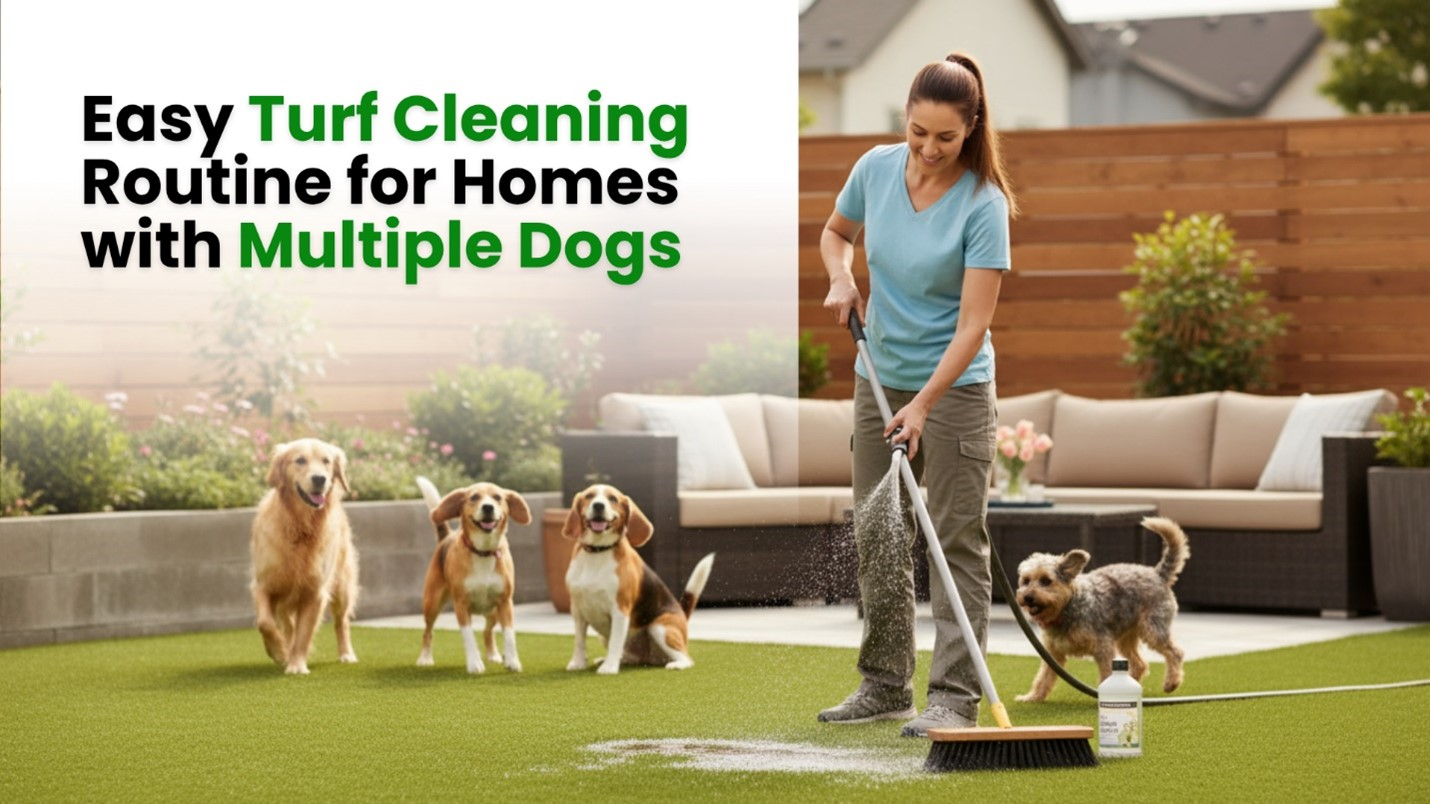
We get the panicked calls around month three. The smell is unbearable. What’s wrong? Then we ask how many dogs. “Oh, we have four Labs.”
That’s the problem right there.
One dog? Basic maintenance works fine. Two dogs? Still manageable with some effort. Three or more? You need an actual turf cleaning routine, not just occasional hosing when you remember.
After 25 years maintaining turf across Dallas, we’ve learned what actually works for turf cleaning for multiple dogs. Not theory. Real-world systems tested on hundreds of yards.
Single dog owners can get away with weekly attention. The dog uses the same three spots. Easy to target and keep fresh.
Multiple dogs? They rotate spots. Mark over each other. Use the entire yard as their bathroom. Three dogs going out 15-20 times daily means constant urine saturation in the infill (that cushioning material under the blades).
The urine doesn’t evaporate. It drains into infill and sits there. Uric acid crystals bond to the material. Each dog adds another layer. Texas heat activates those crystals and releases ammonia. That’s the smell making neighbors complain.
Most homeowners just do everything twice as much. Doesn’t work. You need a completely different approach. If you’ve already tried that and are still struggling, it’s worth checking out the common mistakes homeowners make with artificial turf so you’re not fighting the same problems over and over.
Morning: Walk the yard with a scooper. Get all solid waste immediately. Don’t wait. With multiple dogs, it accumulates fast.
Quick tip from our crews: let fresh waste sit 10 minutes if possible. Firms up, doesn’t smear into fibers.
Quick debris check. Leaves, sticks, toys. Stuff blocks drainage and traps moisture. If you notice standing water or slow drainage, you may also want to review our advice on artificial turf drainage problems and fixes.
Rinse obvious bathroom spots. 30-second spray with garden hose. Just diluting fresh urine before it penetrates deep.
Evening: Second waste pass. Hose down high-traffic paths. Two minutes max.
Total time: 10 minutes. Skip two days and you’ll notice. Skip a week and you’re calling for emergency service.
Saturday morning before temperatures spike:
Clear everything. Not just surface picking. Dog hair is the real problem. Multiple dogs shed constantly. That hair clogs drainage, traps odor, looks terrible.
Leaf blower works best. Stiff broom works too.
Full enzyme treatment. Non-negotiable for multiple dogs. Professional-grade enzymatic cleaner only, not household products. The enzymes break down uric acid crystals at molecular level. For extra guidance on products and habits that keep your lawn looking fresh, you can also use the tips in our artificial turf care guide.
Use hose-end sprayers for even application. Spray the entire yard. Focus extra on bathroom zones but treat everything. Apply in evening, not midday, so it stays wet longer.
Brush against the grain. Multiple dogs flatten blades from constant traffic. Stiff push broom, brush opposite the direction blades lay. Fluffs everything back up.
Takes 10 minutes for average yards. Visible difference immediately.
Light rinse. Removes loosened debris and helps enzyme solution penetrate deeper.
First Saturday every month:
Thorough inspection. Check seams where sections meet. Look for separation, rips, tears. Multiple dogs playing rough will find any weakness. Early detection prevents expensive repairs.
Deep enzyme saturation. Not the weekly spray. Real saturation. Stronger concentration applied heavily. Let it sit 20-30 minutes minimum. Don’t rinse immediately. Bacteria need time to colonize and work.
Infill redistribution. This separates great turf from yards calling us for replacement.
Infill settles unevenly with multiple dogs. High-traffic areas compress and thin out. Get down and feel different areas. Thin spots feel hard, you’ll see backing showing through.
Use stiff broom to redistribute from high spots to thin areas. Sometimes fresh infill needs adding to compressed zones. This single step makes the biggest difference. If your infill is contaminated or worn out, our infill replacement service can reset the foundation of your turf.
Odor assessment. Walk the yard honestly. If areas still smell after treatment, they need professional help.
Summer: Weekly enzyme treatments become twice weekly. Daily rinsing happens twice on 100+ degree days. Heat intensifies ammonia release dramatically. Pair this routine with the recommendations from our texas heat turf maintenance guide to protect both the fibers and the infill.
Spring: Pollen plus shedding winter coats. Debris removal increases. Brush twice weekly to manage hair.
Fall: Falling leaves create constant work. They trap moisture and create perfect odor conditions. Aggressive daily removal necessary.
Winter: Lightest season. Dogs use yard less, cooler temps minimize odor. Basic routine continues but relaxed slightly.
Stiff push broom: Heavy-duty plastic bristles. About $25. For brushing and redistributing infill.
Garden hose: Sufficient pressure and length to reach everywhere.
Hose-end sprayer: Reservoir type for cleaning solution. Makes enzyme application consistent.
Professional enzymatic cleaner: The investment that matters. Store products don’t work for outdoor turf with multiple dogs. Wrong bacterial strains, not UV-stable, lack concentration. Professional products actually eliminate odor instead of masking.
Quality waste tools: Cheap scoopers breakfast with multiple dogs.
Vinegar solutions: Everyone recommends 50/50 vinegar water. Works for single dog light use. Multiple dogs producing constant waste? Completely inadequate. Just creates vinegar-scented pee smell.
Baking soda: Effective for indoor carpets. Useless for outdoor turf. Doesn’t penetrate where problems exist.
Weekly pressure washing: Damages infill, blows it out, harms backing. Creates more problems than it solves.
Generic pet store cleaners: Formulated for indoor carpet, not outdoor turf. Wrong application entirely.
We recommend twice yearly for multi-dog households. Spring and fall typically. Professional equipment includes commercial power brushes, extraction systems, specialized treatments homeowners don’t have.
Your turf cleaning routine handles ongoing work. Professionals handle deep restoration through a full-service turf cleaning, routine maintenance and specialized services tailored to your yard.
Call immediately if you see:
Professional artificial turf maintenance service costs $200-400 depending on size and condition. Infill replacement runs several thousand. Preventive maintenance always beats emergency fixes.
Actual commitment for three to four dogs:
Monthly total: roughly 3-4 hours. Sounds like a lot until compared to natural grass (weekly mowing, edging, treating dead spots, reseeding, managing mud, dealing with tracked mess).
Multiple dogs and artificial turf absolutely work together. We maintain hundreds of multi-dog yards across Dallas. The ones staying fresh and odor-free for 15-20 years share one thing: consistent routine.
Daily basics prevent problems starting. Weekly cleaning keeps things manageable. Monthly work addresses accumulation. Professional service twice yearly ensures longevity.
Homeowners who skip steps always call for emergency service. The ones following the system? Never have problems worth mentioning.
Multiple dogs mean more work than single pets. Still dramatically less than natural grass while providing clean, safe, durable surface for dogs to enjoy.
The key is treating it as the system it is, not optional suggestions to try when convenient. Build the routine, stick to it. Your investment stays protected while dogs stay happy.