
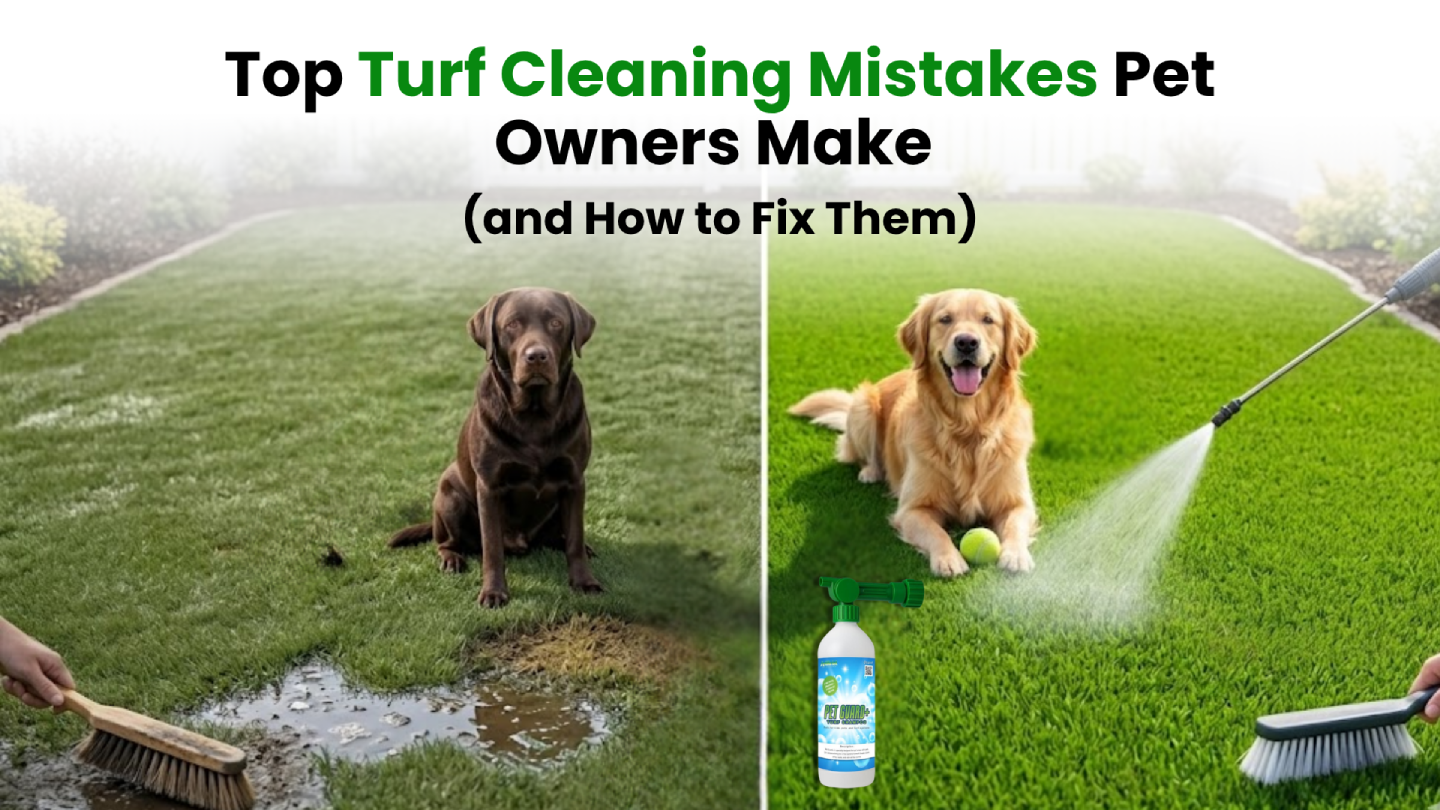
Most pet owners make the same cleaning mistakes that turn great artificial turf into a smelly mess within months.
We’ve fixed hundreds of these problems over 25 years. The turf itself is usually fine. The cleaning approach is wrong.
Here are the biggest mistakes and how to fix them.
Pet owners wait until odor becomes obvious before doing anything. By then, uric acid has crystallized deep in the infill.
Why it’s wrong: Once crystals form, they’re harder to remove. Surface cleaning won’t reach them.
The fix: Weekly rinsing prevents crystals from forming. Monthly enzyme treatments stop bacteria growth before odor develops.
Hosing down the turf seems like it should work. Water alone can’t dissolve uric acid crystals.
Why it’s wrong: You’re rinsing surface urine but not breaking down what’s already crystallized in the infill.
The fix: Use enzyme cleaners designed for pet waste on artificial turf. Apply monthly even if there’s no smell.
Pet owners spray enzyme cleaner and walk away. The enzymes break down crystals but the compounds sit in the infill producing odor.
Why it’s wrong: Broken-down waste needs to be flushed out. Leaving it creates new odor problems.
The fix: Always rinse thoroughly after enzyme treatments. Use full hose pressure for 2-3 minutes per treated area.
General pet cleaners from the store aren’t formulated for artificial grass. Wrong pH, wrong enzyme types, wrong concentration.
Why it’s wrong: These products are designed for carpets or hard floors. They often damage turf backing or don’t penetrate infill properly.
The fix: Use cleaners specifically labeled for artificial turf with pet waste. They have the right enzyme concentrations for this application.
Dogs pick their favorite bathroom spots. That corner gets 10x more urine than the rest of the yard. Pet owners treat the whole yard the same.
Why it’s wrong: High-traffic areas need more frequent treatment. Monthly maintenance isn’t enough for spots getting used multiple times daily.
The fix: Rinse favorite spots daily. Treat them with enzymes weekly, not monthly. The rest of the yard stays on a monthly schedule.
Some pet owners think they can pick it up later when convenient.
Why it’s wrong: Solid waste sitting on turf creates bacteria colonies in the infill that are extremely difficult to remove.
The fix: Pick up solid waste immediately with a bag. Then rinse the spot. Takes 30 seconds and prevents hours of deep cleaning later.
The Internet loves these “natural” solutions for pet odor. They don’t work on uric acid crystals.
Why it’s wrong: Vinegar is acidic. Urine contains uric acid. Acid doesn’t break down acid. Baking soda absorbs surface odor temporarily but doesn’t eliminate the source.
The fix: Buy an actual enzyme cleaner designed for pet waste on turf. Costs more upfront but actually solves the problem.
Pet owners think high pressure will deep clean better. It destroys turf instead.
Why it’s wrong: Pressure washing displaces infill, damages backing, and can create tears in backing layers.
The fix: Use regular garden hose on full pressure. That’s plenty for rinsing.
Already made these mistakes and dealing with odor?
Week 1-3: Weekly enzyme treatments on affected areas. Saturate, wait 20 minutes, rinse thoroughly.
Week 4: Apply beneficial bacteria treatment to establish colonies that digest organic waste.
Ongoing: Monthly enzyme and bacteria treatments. Weekly rinsing of high-traffic spots.
Most odor problems resolve in 3-4 weeks with proper treatment.
Daily: Pick up solid waste immediately. Rinse high-traffic pee spots.
Weekly: Hose down the entire turf area. Remove debris.
Monthly: Apply enzyme treatment. Follow with bacteria treatment. Rinse thoroughly.This routine prevents every mistake above and keeps turf odor-free for years. Need help setting up the right routine? Artificial Turf Maintenance is here to help. We’re in the DFW area and happy to walk you through what works best for your specific situation.