
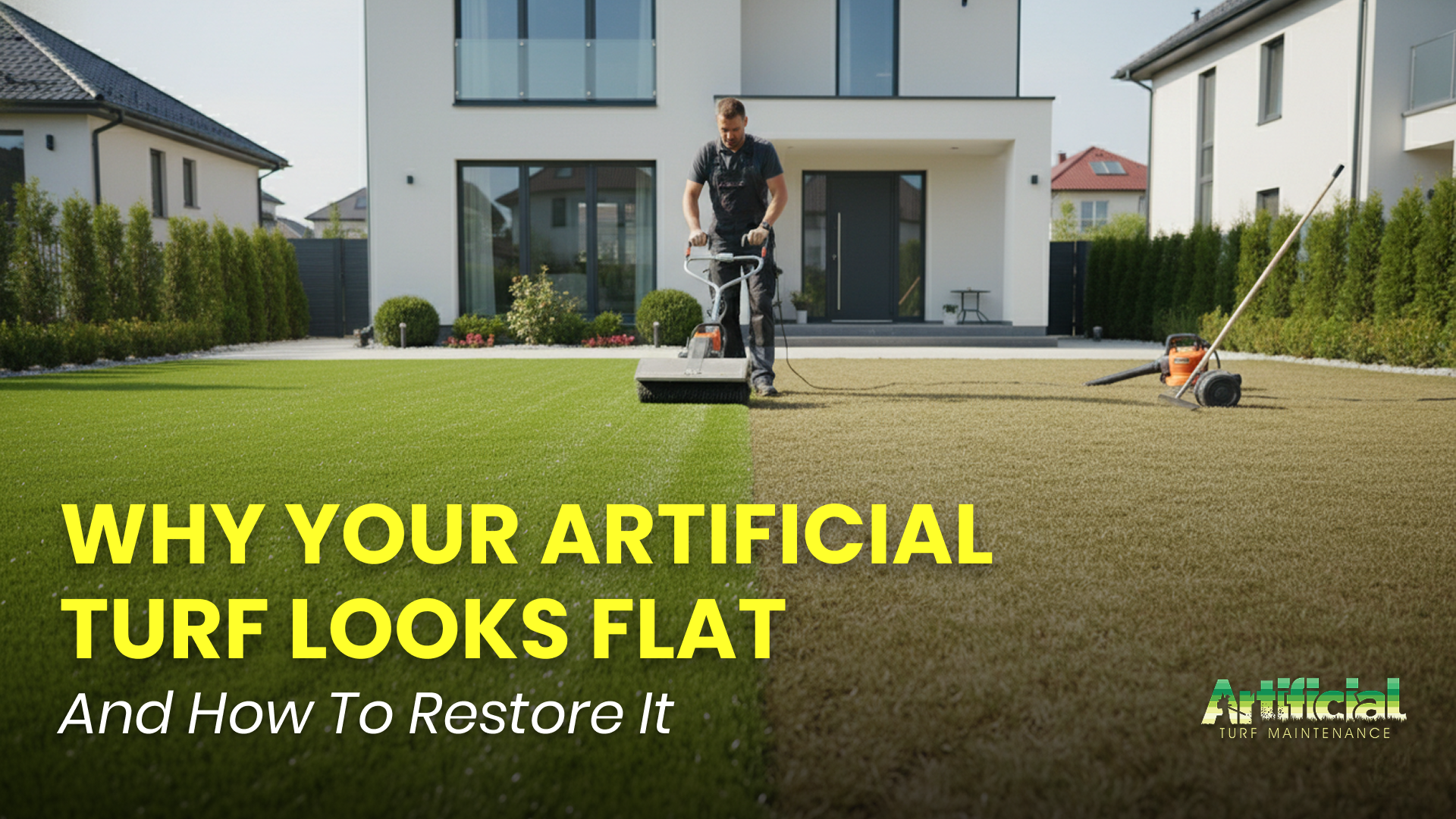
Artificial turf is designed to look great and perform well for years, but like anything exposed to daily use and outdoor conditions, it eventually starts to show its age. Flat fibers, faded color, and a worn-out surface are all common issues that homeowners face after a few years. The good news is that most of these problems can be fixed without a full replacement.
Artificial turf goes flat primarily because of repeated foot traffic, pet activity, and the natural settling of infill material over time. As the infill compacts and shifts, the synthetic fibers lose their upright position and begin to mat down. This process speeds up in high-use areas like play zones, pet runs, and pathways.
Flat fibers are just one sign that your turf needs attention. Watch out for these other indicators:
Catching these signs early means you can restore your turf before the damage becomes irreversible.
Quality artificial turf typically lasts between 15 and 25 years with proper care and maintenance. Without regular cleaning, infill top-ups, and professional rejuvenation, that lifespan can be significantly shorter. Most homeowners who invest in routine maintenance get the full expected life out of their turf and beyond.
In most cases, yes. If the backing and fiber base are still structurally sound, professional rejuvenation can restore the appearance and performance of aging turf. The key services involved are deep cleaning, infill replenishment, and professional brushing to lift and reset the fibers. Replacement is usually only necessary when the backing has deteriorated or the fibers have broken down to the point where they cannot be revived.
Infill is the material packed between the synthetic grass fibers that gives your turf its cushioning, stability, and drainage ability. Over time, infill compacts, shifts to the edges, or becomes contaminated. Infill replacement involves removing the old material and repacking the turf with fresh, high-quality infill. You need it when:
Many homeowners try to restore their turf with a garden hose and a stiff broom. While regular rinsing helps with surface debris, it does not address compacted infill, embedded bacteria, or fiber breakdown. Professional rejuvenation uses specialized equipment to deep clean the fibers, extract and replace compacted infill, and brush the surface at the correct angle to restore the turf’s original look. DIY methods can maintain clean turf, but they cannot restore it.
At Artificial Turf Maintenance, a full turf rejuvenation service covers:
The cost of turf restoration depends on the size of your lawn, the level of deterioration, and whether infill replacement is needed. Rejuvenation is always significantly less expensive than full turf replacement. For an accurate estimate based on your specific turf condition, contact Artificial Turf Maintenance for a free quote.
Yes. Flat turf is one of the most common and fixable issues in artificial grass maintenance. Professional power brushing combined with infill replenishment can restore the upright position of synthetic fibers and bring your lawn back to life.
Most residential turf benefits from a professional rejuvenation every one to two years depending on usage levels. High-traffic areas and turf used by pets may need more frequent attention.
Yes. Rejuvenation extends the life of your turf by several years and is far less expensive than replacement. It also restores safety, hygiene, and curb appeal, making it a smart investment for any homeowner.
Cleaning focuses on removing surface dirt, bacteria, and odors. Rejuvenation goes deeper, addressing infill compaction, fiber flatness, and drainage issues. Most aging turf needs both services together for the best results.
Book Your Turf Rejuvenation Service Today: Call 469-955-1262 or visit artificialturfmaintenance.com